
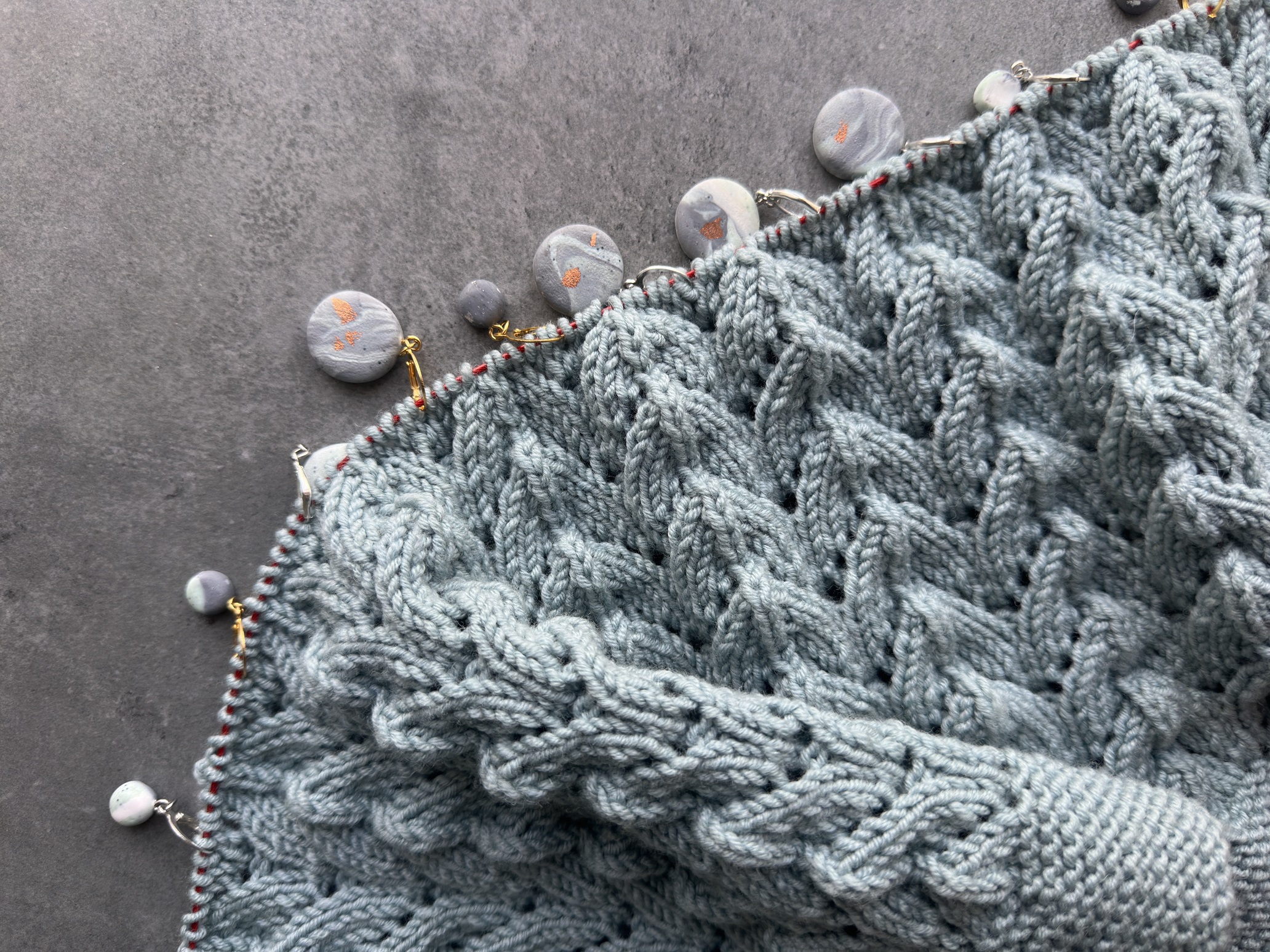
Knitting markers are an important and indispensable tool for every knitter, whether you are a beginner or an experienced professional. Markers help maintain order and structure during the knitting process, making it much easier and more manageable. But what exactly are knitting markers, how do you use them correctly, and what types are there? In this article, I’ll provide a comprehensive overview of knitting markers and how to use them.
Knitting markers are small objects that are attached to or placed on your knitting needles to mark specific spots in your work. They help knitters keep track of important positions in a project, such as the beginning of a row or places where a pattern changes or special knitting maneuvers are required. For example, when knitting a pattern or working decreases, markers indicate exactly where to perform the necessary action. This greatly simplifies the knitting process, as the markers act as reminders so the knitter doesn’t have to constantly track every stitch.
Knitting markers are also used to:
- Mark pattern change locations to keep the work symmetrical and precise;
- Mark the start of a row or the midpoint of the knitting, especially when knitting in the round;
- Count rows or stitches to maintain order in complex patterns;
- Indicate spots where the knitting direction changes, for example, when working short rows;
- Track increases when knitting a raglan to avoid missing increase points;
- Keep track of daily progress in long-term projects.
Types of Knitting Markers
Knitting markers come in different materials, each with its own advantages. The most popular materials are:
- Plastic: Lightweight and inexpensive markers, available in many colors and shapes. Ideal for those who need a large number of markers at an affordable price. Note that they may not always be durable and can break easily.
- Metal: Stronger and more durable markers, often with elegant designs. Perfect for knitters who want to use the same markers long-term and value durability.
- Wood: Natural and aesthetically appealing markers, especially popular with those who appreciate natural crafting materials. Wooden markers are light and easy to use.
- Polymer clay: Personalized and unique markers, often handmade. Polymer clay markers offer a creative approach and are ideal for knitters who appreciate a customized tool.
Types of Marker Closures
Markers also come in different styles depending on their purpose:
- Closed markers: Placed on the needle and move with the stitches until removed. Ideal for marking positions that remain fixed throughout the knitting, such as the start of a row.
- Open markers: Can be easily removed and placed at any time. Typically used to mark temporary positions, such as specific stitches or pattern elements that change during knitting.
- Markers with clasps or hooks: Often used to count rows or when knitting with smaller needles, such as sock needles.
When choosing knitting markers, it’s important to consider not only the material and shape but also the type and complexity of your knitting project. For complex patterns with many repeating sections, different colored markers may help with orientation. For simpler projects, a small set of markers may be sufficient.
Overall, knitting markers are a very important tool that helps maintain order and accuracy in your knitting. They are suitable for knitters of all skill levels and come in various designs, materials, and functions to meet the needs and preferences of every crafter. Choose the markers that best suit your project and enjoy a smoother, more organized knitting process.
